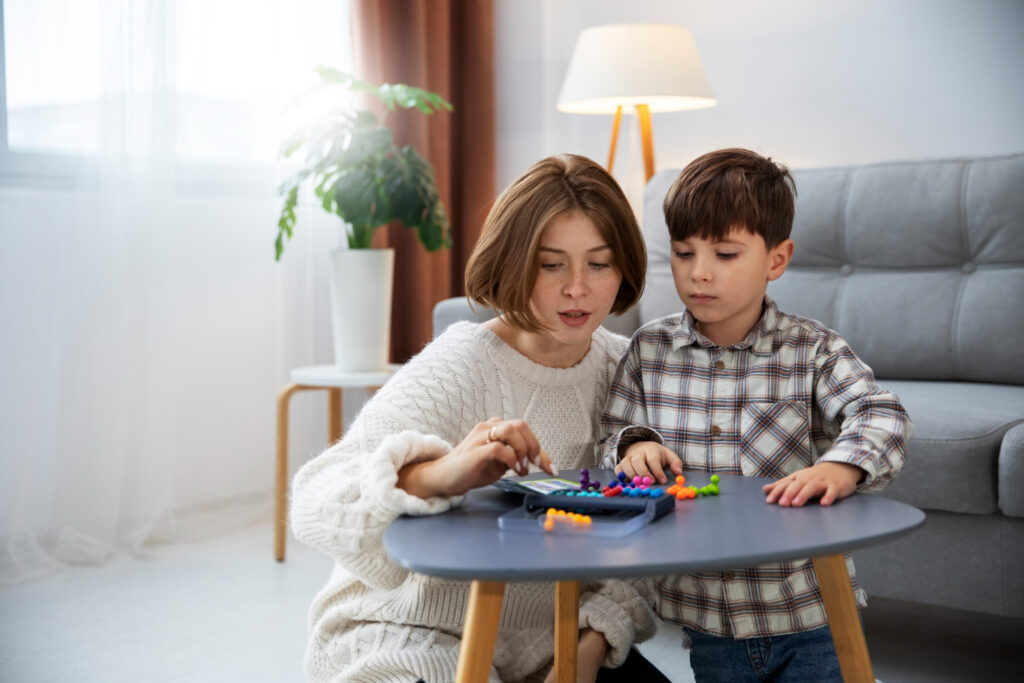
For many families raising a child with autism, the moments that feel most challenging are not the big clinical ones — they are Tuesday mornings when getting dressed turns into a thirty-minute battle, or dinnertime when the texture of a new food causes real distress. Daily living skills are the practical, everyday abilities that most people develop without much deliberate instruction. For children with autism, these skills often need to be taught explicitly, with patience, consistency, and the right strategies.
At Autism Centers of Utah, daily living skills are woven into ABA therapy and occupational therapy programs because they matter deeply — not just for the child’s independence, but for the whole family’s quality of life.
What Are Daily Living Skills?
Daily living skills — sometimes called adaptive skills or self-care skills — are the tasks that allow a person to take care of themselves and function in everyday environments. For children, they include:
- Personal hygiene: Hand washing, tooth brushing, bathing, face washing
- Dressing: Putting on and taking off clothing, managing buttons, zippers, and shoes
- Mealtimes: Sitting at the table, using utensils, tolerating different foods, managing mealtime routines
- Toileting: Toilet training, managing hygiene independently
- Following routines: Moving through transitions, preparing for school, managing morning and bedtime sequences
- Basic household participation: Picking up toys, simple chores, navigating community settings with caregivers
These skills are not trivial. A child who can dress independently has more autonomy. A child who can tolerate mealtimes has reduced family stress and better nutrition. A child who follows a morning routine arrives at school ready to learn. The downstream effects of daily living skills are significant.
Why Children with Autism Often Need Direct Instruction
Typically developing children often pick up daily living skills through observation, imitation, and natural practice. For many children with autism, this implicit learning is less reliable. Several factors can interfere:
Sensory sensitivities can make tasks that seem simple genuinely uncomfortable. The sensation of certain fabrics against skin, the sound of water, the smell of soap, or the texture of food can trigger real distress — not defiance. Understanding this reframes “resistance” as a sensory experience that needs to be addressed thoughtfully, not pushed through.
Sequencing challenges can make multi-step tasks difficult. Getting dressed involves more than a dozen steps in a specific order. For a child who struggles with sequencing, each step needs to be broken down and taught explicitly.
Difficulty with transitions means that moving from one part of a routine to another — from play to bath time, from breakfast to getting shoes on — can cause significant distress. Predictability and preparation help.
Generalization — applying a skill learned in one context to a new situation — is often a specific challenge. A child who can wash hands in therapy may not automatically apply that skill at home or school without practice across settings.
How ABA Therapy Builds Daily Living Skills
Applied Behavior Analysis addresses daily living skills by breaking each task into clear, teachable steps and teaching them systematically using positive reinforcement. This approach — called task analysis — takes something like brushing teeth and breaks it into 10 or 12 distinct steps, each of which is practiced until it becomes fluent and automatic.
At Autism Centers of Utah, BCBAs design the skill-building program based on assessment of what the child currently does independently, what they can do with prompting, and what is most important to the family at this stage. RBTs implement the program in direct therapy sessions, using the methods the BCBA has designed.
Prompting strategies are used thoughtfully — full physical guidance when a child is just learning a step, then gradually faded as the child develops independence. The goal is always to reduce reliance on prompts over time, not to create dependence on them.
Visual supports — picture schedules, first-then boards, visual checklists — are powerful tools for children with autism learning daily routines. A visual sequence for the morning routine gives a child a concrete reference point for what comes next, reducing anxiety and the need for repeated verbal reminders.
The Role of Occupational Therapy
For some daily living skills, occupational therapy (OT) plays a critical supporting role. OT at Autism Centers of Utah is available for ABA clients whose treatment plans include it, and focuses on areas like:
- Sensory processing — helping children tolerate and regulate responses to sensory input so that tasks like dressing, bathing, and eating become more manageable
- Fine motor skills — developing the hand strength, coordination, and precision needed for tasks like fastening clothing, managing utensils, and personal hygiene
- Motor planning — the ability to plan and execute sequences of physical movements
Because ABA and OT therapists work in the same facility and communicate directly, goals can be coordinated across disciplines. What a child practices in OT can be reinforced in ABA sessions and at home, creating consistency across all the environments where a child spends time.
Feeding Therapy and Mealtime Challenges
Mealtime is one of the most common sources of daily stress for families of children with autism. Food selectivity — eating only a narrow range of foods — is very common and is often driven by sensory sensitivities to taste, texture, smell, or appearance. Children are not being picky; they are responding to genuine discomfort.
Autism Centers of Utah offers feeding therapy for ABA clients who experience significant challenges with food selectivity, sensory feeding difficulties, or mealtime behaviors. The approach uses gradual, structured exposure combined with positive reinforcement to help children slowly expand their food repertoire at a pace that respects their individual sensory thresholds.
What Families Can Do at Home
Therapy works best when families can reinforce skills in daily life. Here are practical strategies that align with what Autism Centers of Utah uses in clinical programs:
Use visual schedules. Create a picture sequence for morning routines, bath time, or bedtime. Photographs of your own child doing each step are especially effective. Post the schedule where your child can see it and reference it during the routine.
Keep language consistent. Use the same words your child’s therapists use for each step. Consistency reduces confusion and helps skills transfer from the therapy setting to home.
Break tasks into smaller steps. If your child resists tooth brushing, start with just tolerating the toothbrush near their mouth. Each step toward independence is a genuine achievement worth reinforcing.
Use reinforcement meaningfully. Identify what your child genuinely enjoys — a preferred activity, a few minutes of a favorite video, verbal praise — and use it consistently after successful attempts. Reinforcement should be immediate and clearly connected to the behavior.
Reduce sensory barriers where possible. If certain clothing textures cause distress, experiment with tagless options, seamless socks, or softer fabrics. Accommodating sensory needs is not giving up — it is removing unnecessary obstacles so the child can focus on learning the skill itself.
Communicate with your child’s therapists. Your observations at home are valuable clinical information. Share what is working and what is not. At Autism Centers of Utah, parent input is built into the treatment process because you know your child better than anyone in the clinic does. Read more about how parent training strengthens autism therapy outcomes and why it is central to the program.
The Bigger Picture: Independence and Quality of Life
Daily living skills instruction is ultimately about more than getting dressed or eating dinner without conflict. It is about building a foundation for independence — the kind of independence that allows a person to participate meaningfully in school, community, and eventually adult life.
Every skill a child masters reduces their reliance on others and expands their world. The child who can manage their morning routine has more time and energy for learning at school. The child who can communicate at a restaurant has more social opportunities. The child who can handle transitions with less distress has a calmer, more connected family life. For families also navigating school transitions, our post on how ABA therapy supports school transitions for children with autism offers practical context.
These are not small things. They are the things families tell us they care about most.
Frequently Asked Questions
When should daily living skills be a focus of therapy?
As early as possible. Skills like hand washing, following simple routines, and tolerating basic hygiene tasks can be introduced in early childhood and built upon over time. Early instruction means more years of practice and independence.
My child has a meltdown every morning during the routine. Is that something therapy can address?
Yes. Challenging behaviors around routines are often driven by predictability, sensory, or communication factors — all of which ABA therapy directly addresses. A BCBA at Autism Centers of Utah can assess what is driving the behavior and design a plan to address it.
Does insurance cover daily living skills therapy?
ABA therapy that includes daily living skills goals is typically covered by insurance when medically necessary. Autism Centers of Utah is in-network with Blue Cross Blue Shield and Utah Medicaid. Call us to verify your specific coverage.
How long does it take to learn a new daily living skill?
It depends on the skill, the child, and how consistently it is practiced across settings. Some skills develop relatively quickly with the right supports; others take months of consistent work. Progress is tracked through data so the team can see what is working and adjust accordingly.
If your family in Sandy, West Jordan, or the surrounding area is looking for support building independence skills for your child, Autism Centers of Utah is here to help. Call us at (385) 417-3869 to start with a welcome call and learn how our ABA and occupational therapy programs can make a real difference in your child’s daily life.