One of the most consistent findings in autism research and clinical practice is that children with autism do better when their environment is predictable. This is not a preference or a quirk — it reflects how many children with autism experience and process the world. Unexpected changes, shifting schedules, and unpredictable sequences create cognitive and emotional load that interferes with learning, communication, and behavior regulation. Routines reduce that load.
ABA therapy is built around this reality. Skilled BCBAs design treatment plans that use structured, repeatable interactions to help children learn new skills. But the benefit of that structure extends far beyond the therapy room. When families establish consistent daily routines at home, they create an environment that supports and extends what therapy is accomplishing — and the research on generalization strongly suggests that skills practiced across multiple consistent environments are more durable than those acquired in a single setting.
This post explains why routines matter in ABA therapy, how to build them at home, and how to make them practical for real family life.
Why Routines Matter for Children with Autism
Routines do several things simultaneously for children with autism. First, they reduce anxiety. When a child knows what comes next — when the morning sequence, the arrival home, and the bedtime routine are predictable — the brain is freed from the work of orienting to what is happening. That cognitive and emotional space becomes available for learning, communication, and engagement.
Second, routines create natural practice opportunities. A child working on requesting in ABA therapy can practice that skill at breakfast every day if the routine is structured to create that opportunity. A child working on tolerating transitions benefits from a predictable end to each activity that signals what comes next. Routines do not have to be created from scratch — they can be shaped to embed therapy goals into activities that already happen.
Third, routines reduce problem behavior. Many challenging behaviors — tantrums, refusals, aggression, self-injurious behavior — are functions of anxiety, frustration, or the inability to communicate a need. When routines make the environment more predictable and create clear opportunities to communicate, the function of many problem behaviors is addressed at the source.
How Routines Are Built Into ABA Therapy at Autism Centers of Utah
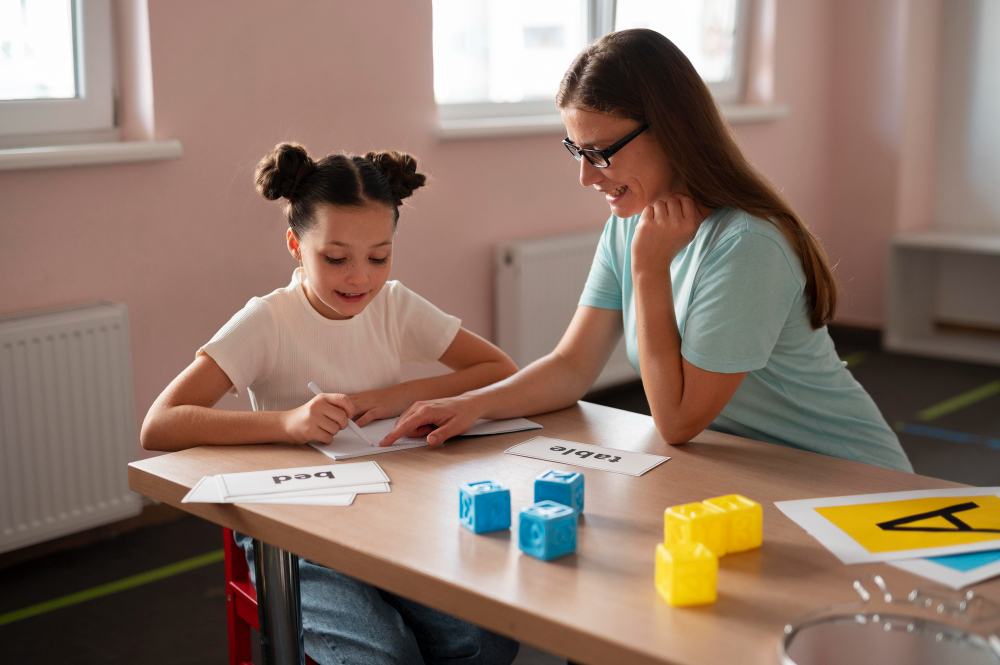
At Autism Centers of Utah, structure is embedded into every part of the therapy day. Children who attend our center in Sandy follow predictable session formats. They know how sessions begin, when transitions happen, and what signals the end of an activity. This predictability is intentional — it creates the conditions in which learning happens most efficiently.
Our BCBAs design treatment plans that include specific routines as both teaching vehicles and targets. For some children, learning to follow a morning routine independently — getting dressed, eating breakfast, preparing a bag — is itself a clinical goal. For others, routines are the scaffold on which other skills are practiced: social skills during snack, requesting during play, waiting during group activities.
Registered Behavior Technicians use the same language, the same prompting sequences, and the same reinforcement strategies across every session. That consistency is a form of routine — the child knows what to expect from the therapeutic interaction itself, which reduces resistance and speeds acquisition of new skills.
Building Effective Routines at Home
Home routines do not need to be elaborate to be effective. What matters is consistency — the same sequence, the same signals, the same expectations, day after day. Here is how to build routines that genuinely support your child’s ABA therapy progress:
Start with the anchors of the day. Morning, after school or therapy, dinner, and bedtime are the natural anchors for family routines. Pick one anchor routine to establish first rather than trying to structure the entire day at once. A predictable morning routine alone can reduce morning meltdowns, improve transitions, and set a regulated emotional tone for the day.
Use the same sequence every time. The power of a routine is in its consistency. If the morning routine is wake up, bathroom, dressed, breakfast, that sequence should happen in that order every day, including weekends when possible. Variability defeats the purpose.
Add visual supports for your child. Many children with autism benefit from seeing the routine as well as hearing it described. A simple picture schedule — photos or images representing each step — posted where the routine happens lets the child orient themselves without relying on verbal instructions. Ask your BCBA to help you create one that matches the goals your child is working on.
Use transition warnings. Give your child advance notice before a routine step ends. “Two more minutes, then we brush teeth” provides the predictability that reduces resistance at transitions. Use the same language each time so it becomes a reliable signal rather than an arbitrary warning.
Keep the language consistent with therapy. Ask your child’s BCBA what words and phrases they use during sessions — for instructions, praise, and transitions. Using the same language at home creates continuity that helps skills generalize more quickly. If your child’s therapist says “first/then” to describe sequences, use the same phrasing at home.
Reinforce routine completion. When your child moves through a routine step successfully — especially with less prompting than before — acknowledge it. You do not need a formal reward system; consistent, specific verbal praise (“You got dressed by yourself, great job”) is meaningful reinforcement that supports the same learning mechanisms ABA therapy uses.
Handling Routine Disruptions
Life involves disruptions — travel, illness, holidays, schedule changes. For children with autism, unexpected changes to routine can trigger significant distress. The goal is not to eliminate all disruptions but to handle them in ways that minimize their impact and build your child’s flexibility over time.
Prepare in advance. When you know a routine will change — a holiday, a trip, a change to the therapy schedule — give your child as much advance notice as possible. Use simple, concrete language to describe what will be different and what will stay the same.
Use social stories. A social story is a brief, first-person narrative that walks through an upcoming event or change step by step. BCBAs at Autism Centers of Utah often create these for children who are preparing for changes. You can ask for one, or create a simple version at home using photos and short sentences. Keeping routines stable during transitions also supports the work described in our post on maintaining ABA therapy progress during school breaks.
Keep as many anchors as possible. Even during disruptions, maintaining one or two key routines — bedtime, for example — provides a sense of security. The routine does not have to be perfect; some consistency is better than none.
Debrief with your BCBA. If a disruption significantly affects your child’s behavior or regression at home, mention it at your next team meeting. This context helps the clinical team understand changes they may see in session data and adjust accordingly.
When Routines and Therapy Goals Align
The most powerful home routines are those designed in collaboration with your child’s BCBA. At Autism Centers of Utah, parent involvement is a genuine part of our clinical model. We encourage families to share what home routines look like, what challenges they face, and where they want their child to grow outside of the therapy center. Families can also track their child’s progress at home to strengthen that collaboration.
That information helps BCBAs set goals that are meaningful in your child’s real life, not just skills that perform well in a controlled therapy setting. A child who can follow a visual schedule independently at our center, but whose home has no equivalent structure, has not yet fully generalized that skill. When home and therapy routines align, the child experiences the same expectations across environments — and that consistency is what produces lasting, meaningful progress. Learn more about how goals are tailored in our post on how ABA therapy supports individualized goals for each child.
Taking the Next Step
If your child is enrolled at Autism Centers of Utah, ask your BCBA at your next meeting which home routines would most support your child’s current therapy goals. If you are exploring ABA therapy for the first time, we would be glad to talk with your family about how our program works and what getting started looks like.
Autism Centers of Utah serves families in Sandy and surrounding communities including Draper, South Jordan, Riverton, and Midvale. To reach our team, call (385) 417-3869. We are here to support not just your child’s therapy progress, but your whole family’s confidence in the journey.